


Diagnosing a problem with a septic tank, or any sewage treatment system, is the first step to fixing it. We recommend that a professional be enlisted to inspect the tank with a scope to assess whether there’s any actual damage to the system or if there’s just a blockage. Both can be detected with a scope, which is essentially just a camera on a flexible pole. If there’s no damage to the system, then you probably have a block, and vice versa.
Unfortunately, if there is damage to the system, then often you’ll need to purchase a new septic tank. When the structure of the septic tank is damaged or cracked, the entire system is vulnerable to breaking further. The collapse of a septic tank could be catastrophic for human health and for the health of any nearby watercourses, too. It may be worth upgrading to a sewage treatment system instead of a septic tank in this case.
Table of contents:

How do you unclog a blocked septic tank?
Step one: Identify the issue
Try to ascertain what the blockage is. Is it unmoving sludge/waste from the tank? Is there a build-up of materials that have been flushed from the system? Alternatively, is the blockage a natural material like silt and leaves?
You can learn more about this and other common septic tank problems via our dedicated guide.
Step two: Research combating bacteria
Research the correct bacteria for septic tanks that you can add to combat this. Do NOT use chemicals. This can damage the septic tank to no end.
Learn more about what cleaning products you can use with a septic tank via our guide.
Step three: Add treatment
Add the recommended dose of treatment for bacteria. Leave the treatment to work its magic for the time noted on the container. Don’t tamper with or attempt to move the blockage at this time
Step four: Check if treatment has worked
After the time of treatment is complete, inspect the blockage again. Has it gone or moved? If the blockage has just moved, then read whether you can add another dose of bacteria treatment (it will say on the container) and add another lot of the recommended dose if you can.
Step five: Repeat the treatment process as directed
Repeat this until the treatment has been effective or until you’re no longer able to add any more of the treatment
Please note: If you can’t add any more bacteria treatment after the first dose, then consult a professional in the sewage treatment industry. They will be well-equipped and well-versed to move the blockage.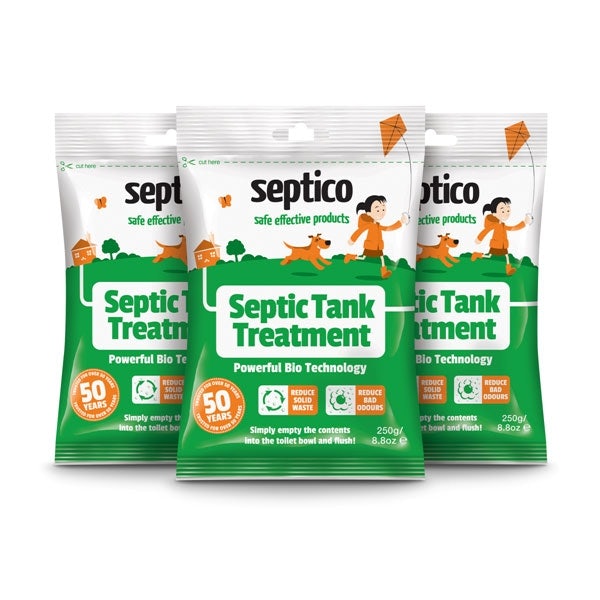
Was this guide useful?
Mentioned in this project guide: