


It rains a lot in the UK, so your drainage system must be up to the task. As a homeowner, you need to choose the proper gutter downpipe sizes after carefully considering multiple factors, such as the roof area and the flow capacity of your chosen rainwater system.
If you’d like to find out more, you’ve come to the right place! We dug deep to find out everything you need to know about downpipe sizes in the UK and how to measure them. Read on to learn more.
Table of contents:
- What downpipe material options are there?
- What size downpipe do I need?
- What length is a downpipe?
- How do you measure water pipe size?
- How many downpipes do I need in the UK?
- Conclusion
What downpipe material options are there?
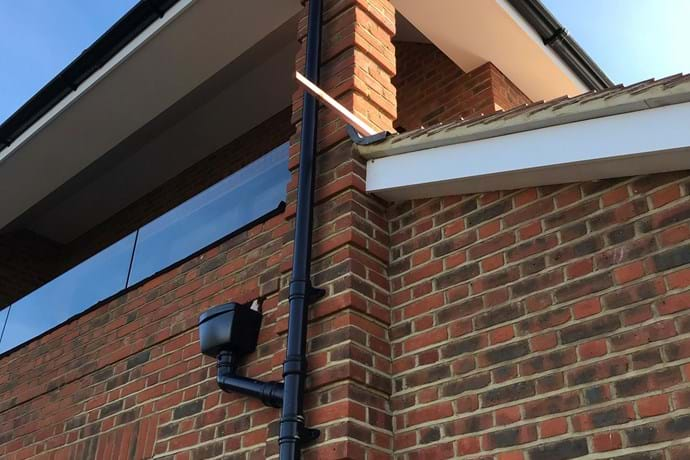
Downpipes in the UK are manufactured from different materials. Traditionally, older buildings built prior to the mid-1930s were fitted with cast iron downpipes.
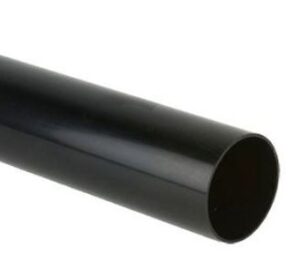
Nowadays, you’re far more likely to come across a plastic downpipe than a cast iron one, although it’s possible to get the best of both worlds with a cast iron-style plastic rainwater downpipe.
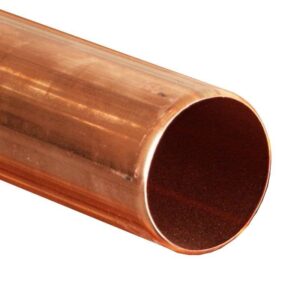
Moreover, copper, zinc, aluminium and stainless-steel offers as well as flexible downpipe guttering are also available.
In case you’re wondering what the construction material has to do with the rainwater downpipe size, the thickness of a downpipe varies depending on the material.
For instance, most plastic, aluminium, zinc and copper downpipes in the UK are approximately 2mm thick. In contrast, cast iron downpipes are significantly thicker, coming in at anywhere between 9mm and 13mm depending on the brand and whether there’s any rust.
Whichever material you go for, make sure that the downpipes and the guttering system they’re a part of are designed to British Standards BS EN 12056-3:2000 Gravity drainage systems inside buildings. Roof drainage, layout and calculation (AMD 17041), 2000.
What size downpipe do I need?
Just like the materials used in the manufacture of drainpipes, downpipe sizes in the UK vary from supplier to supplier.
So, if you were wondering whether there’s a single, standard size, the simple answer is ‘no’.
However, there’s no need to be alarmed or disappointed. Downpipes come in two shapes: square and round. Guttering downpipe sizes range from 65mm for a square downpipe to a 120mm downpipe diameter for a round one. Some brands offer extra-large sizes of 200mm, which are designed for use in industrial applications.
If you look hard enough, you might come across smaller sizes of 50mm as well.
Keep in mind that these numbers refer to the outer diameter. As we mentioned earlier, the inner diameter will vary depending on the material. The same goes for advertised square downpipe sizes – unless otherwise stated, they’re outside measures.
Luckily, there’s no shortage of options. Even though 68mm round and 65mm square downpipes are among the most common, most rainwater systems are available in multiple sizes. For example, this might be 75mm, 87mm, 100mm and 120mm for a certain range, with corresponding gutter sizes to match.
Check out our expert guide on guttering sizes in the UK to find out more.
What length is a downpipe?
Like diameters, downpipe lengths in the UK vary considerably from brand to brand. Having said that, if you spend enough time studying rainwater system brochures, you’ll notice certain patterns.
2400mm and 2500mm are the two most popular and widely available options on the market. Likewise, slightly shorter lengths of 1800mm and 2000mm are not uncommon. You can even come across significantly shorter downpipes of 600mm, many of which are designed to meet the unique requirements of heritage properties.
When it comes to longer downpipes, 4000mm tends to be the most commonly used length. Keep in mind that, as with gutter downpipe sizes, many brands will offer more than one option.
So, there’s no need to worry about finding the right downpipe size and length for your house, as long as you know what you’re looking for, that is.
How do you measure water pipe size?
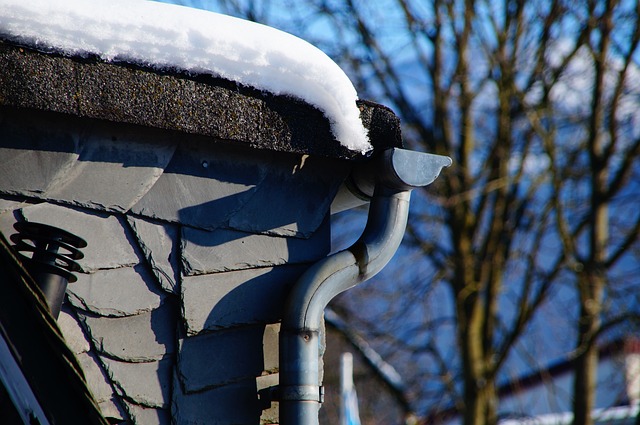
The easiest way to measure the outside diameter of a round downpipe is with a flexible tape measure. This is also known as a tailor’s tape measure.
In fact, most of us do. If that includes you, simply use your tailor’s tape measure and use it to note the circumference of the downpipe.
Next, divide the figure by π (3.14), and voila! You have your outside diameter.
If you’re confused, here’s a quick example:
Your measurements show the pipe’s circumference is 251mm. So, using our simple equation, 251 divided by 3.14 equals 79.93. Round it up, and you’re looking for an 80mm round downpipe (a fairly common size).
If you don’t happen to have a flexible tape measure, you can use a piece of string. Simply wrap it around the pipe tightly, mark where the ends meet and use a ruler to measure the length. Then, proceed as above.
Square downpipes are even easier to measure with a ruler or tape measure. You don’t even need to perform any calculations.
Last but not least, to measure the internal diameter of a downpipe, you’ll need to subtract the thickness of the pipe from the outside diameter. That’s why you need to know what material it’s made from. Unless you have a spare pipe, that is – in which case you can use a tape measure.
How many downpipes do I need in the UK?
As the rate of rainfall varies significantly across the UK, there are no government regulations regarding the exact number of downpipes on a specific building.
Simply put, unless you’re planning on replacing your old rainwater system with a completely different one or building major extensions, you should be fine with the same number of downpipes you’ve had up to this point.
If you’re still curious, though, this is how you approach the task.
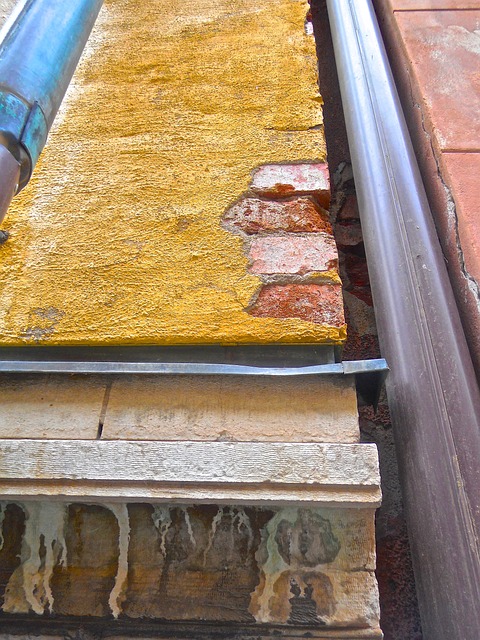
The number of necessary downpipes for a property depends primarily on the size of the roof and the flow rate of the gutters.
To calculate the part of the roof which collects rain, known as Effective Roof Area (AE), you need to use the following formula:
AE (m2) = L x (W + H/2)
- L= roof length in metres
- W= eaves to ridge width in metres
- H= eaves to ridge height in metres
Then, the flow rate (FR) of the gutter varies depending on the type (round, square, ogee, deep) and size.
The relevant formula here is:
FR (litres/second) = AE x RI
- AE=effective roof area
- RI=rainfall intensity.
Keep in mind that a few other factors, such as the position of the pipes, are likely to affect the system’s overall performance and should be taken into account.
Moreover, for your calculations to be accurate, you’ll have to get the relevant rainfall levels for your area from an approved weather authority such as the Met Office.
As you can see, this is quite a lengthy process best left to professional roofers.
Conclusion
Gutter downpipe sizes in the UK are not standardised, which is why you’ll find different options across different rainwater systems and manufacturers.
The same goes for lengths and construction materials.
Luckily, measuring your downpipe diameter is quick and easy, with only a couple of basic tools necessary.
So, you should have no problem finding the proper downpipe size of any replacements in a square or round profile that you’re likely to need in your next drainage project.